
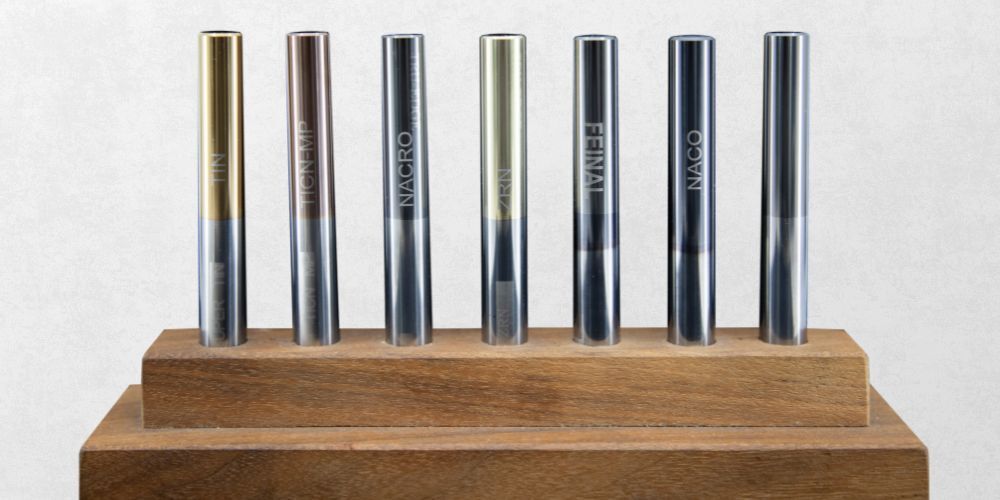
The tooling conversation is changing. For years, many manufacturers could make a simple economic choice: use several lower-cost tools in sequence, accept the longer cycle time, and reserve engineered multifunction tools for the highest-volume programs. That model worked when carbide pricing was more forgiving. It becomes much harder to defend when every solid carbide tool in the sequence costs more to buy, more to replace, and more to carry in inventory.
Consider a common automotive-style machining sequence: drilling a multi-diameter blind hole in cast iron or aluminum. The traditional process might rough-drill the first diameter, change tools, rough-drill the second diameter, change tools again, chamfer one or more diameter transitions, bore each diameter to finish size, and then remove potential burrs. For a small-volume job, that can still be rational. The tooling is familiar, the programming is straightforward, and the upfront tool investment is manageable.
But in production, that sequence has hidden costs everywhere. Every tool change adds non-cutting time. Every setup creates a chance for stack-up variation. Every additional tool must be purchased, managed, inspected, stored, tracked, and eventually replaced. As carbide pricing increases, the old “cheap tools” decision is no longer cheap. It may simply be spreading the cost across more line items.
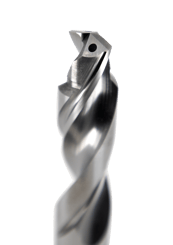 The alternative is a multifunction tool designed around the part, the machine, the material, and the production target. Think of it as the Swiss army knife of cutting tools, but engineered with far more discipline. One tool can rough and finish in one pass. It can carry multiple diameters, chamfer features, bore critical surfaces, manage transitions, and reduce burr formation. The result is not just fewer tools. It is a more controlled process.
This is where Tru-Edge is positioned to help. The opportunity is not to sell a more expensive tool. The opportunity is to design a tooling solution that lowers cost per part over the full life of the asset. That distinction matters. A multifunction carbide tool may cost more to engineer and manufacture at the beginning, but if it is designed to be re-sharpened and returned to controlled performance multiple times, the economics change quickly.
 Here is the simple way to frame it. A conventional process may require three roughing tools, two boring tools, a chamfer tool, and a deburring tool. Each tool has its own cost, wear pattern, inventory requirement, and replacement cycle. A multifunction tool consolidates those operations into one engineered asset. If that asset can be re-sharpened by design up to 10 times, then it delivers 11 usable lives: the original tool plus 10 regrinds. The initial price no longer tells the whole story.
The better question is: what does the tool cost over all 11 lives, and what does it save every time it runs? In higher-volume production, savings can come from fewer tool changes, shorter cycle time, fewer offsets, less variation at the point of cut, better finish control, reduced burr risk, lower inspection friction, and fewer emergency purchases. The tool is only one part of the equation. The process around the tool is often where the real savings show up.
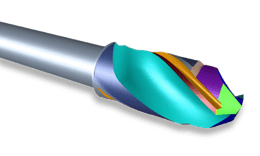 Regrindability has to be engineered into the tool from the beginning. A tool that is merely sharpened after wear is different from a tool designed to be sharpened repeatedly. Geometry, coating, flute form, margin control, coolant delivery, feature relationships, and inspection criteria must all be considered before the tool ever reaches the spindle. The design must preserve enough material and control enough geometry to support multiple returns to production.
Tru-Edge brings that life-cycle perspective to the discussion. The goal is not just to make the tool perform on day one. The goal is to make the tool perform predictably over its full economic life. That includes the original design, manufacturing plan, coating strategy, regrind plan, inspection method, and customer communication loop. When those pieces work together, a high-value tool becomes a managed production asset rather than a consumable expense.
Quality discipline is the difference between “resharpened” and “trusted again.” Customers have every right to ask whether a reground tool can perform as good as new. The answer depends on whether the tool was designed, documented, inspected, and processed with that outcome in mind. A serious regrind program should define what features matter, how they will be measured, how performance will be protected, and when the tool has reached the end of its practical life.
That last point is important. Not every tool should be reworked forever. When a tool can no longer be restored within the required geometry, tolerance, coating condition, or performance expectation, the right partner should say so. In many cases, the next move is not to force another regrind. It is to manufacture the replacement using the knowledge gained from the tool’s prior lives. That is how tool-life management becomes continuous improvement.
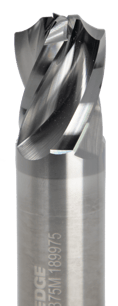 Multifunction tooling is especially compelling in the current carbide environment because it reduces the number of separate carbide assets required to make the part. It also concentrates engineering effort where it can produce a measurable return. Instead of buying several tools that each solve one step, the manufacturer invests in one integrated solution that improves the whole machining sequence.
For the multi-diameter blind-hole example, that can mean one pass where several operations used to occur. It can mean more predictable bore relationships because the features are generated by one tool. It can mean less burr formation because transitions are designed into the drill. It can mean more stable production because the regrind plan is established before the first tool is consumed.
The message is direct: carbide inflation should push manufacturers to look beyond purchase price. If a part is recurring, if tool changes are eating time, if burrs or bore finishes are creating downstream pain, or if the tool crib is carrying too many similar carbide tools, it is time to review the process. Tru-Edge can help evaluate whether a multifunction, regrindable tool is the better business decision.
The cheapest tool is not always the tool with the lowest invoice price. In many production environments, the best tool is the one that cuts the part consistently, reduces the number of steps, survives multiple useful lives, and gives the team fewer reasons to stop the machine. That is the real advantage of multifunction tooling designed for regrindability: one engineered solution, multiple lives, lower cost per part.
If you want to learn more about how you can improve the life of your cutting tools, give us a call at 419-678-4991 or visit our website at www.tru-edge.com. We’ll get our TE Tech Team involved and simplify your machining processes!