
-1.png)
Quality is at the center of everything we do at Tru-Edge. But for our customers, quality is not an abstract concept—it’s measured in uptime, performance, cost savings, and confidence.
 As Steven, Director of Quality at TE+, puts it: “Quality is not just inspection—it’s a system, a mindset, and a culture that drives everything we do.” This philosophy shapes how we answer the most important questions our customers ask.
How Many Times Can I Resharpen My Tools?
The answer depends on geometry, application, and wear patterns. However, our approach is rooted in maximizing usable life while maintaining performance integrity. Through controlled material removal and precision grinding, many carbide tools can be resharpened multiple times.
Steven emphasizes that “if you don’t get the basics right, you can’t do the advanced work.” That means every resharpening process is standardized, measured, and validated.
What Happens When a Tool Can No Longer be Reconditioned?
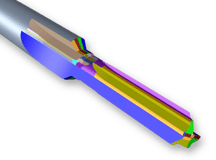 When a tool reaches the end of its reconditioning lifecycle, we don’t leave customers without options. Our engineering and manufacturing capabilities allow us to reverse engineer or produce new tools that match or exceed original specifications.
This is where our integrated Tru-Edge ecosystem becomes critical—combining reconditioning with engineering and manufacturing expertise.
Can You Guarantee Performance ‘As Good As New’?
Performance equivalency is one of the most important—and scrutinized—questions we receive. Our answer is grounded in process control.
We utilize CTQ (Critical to Quality) documentation for every customer, ensuring that every tool meets defined specifications. “Customer-defined quality starts with understanding their requirements,” Steven explains.
In addition, our inspection processes, including visual documentation and traceability, ensure that every tool leaving our facility meets those standards.
How Do You Ensure Consistency?
Consistency is not accidental—it’s engineered. Through Lean methodologies like 5S and value stream mapping, we eliminate variability and non-value-added activities.
By standardizing workflows and maintaining strict documentation, we ensure repeatability across every order.
How Do You Prevent Defects Before They Happen?
Prevention is where Tru-Edge differentiates itself. Rather than relying solely on inspection, we build quality into the process.
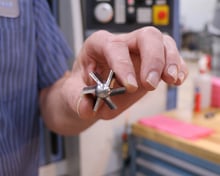 For example, photographing tools at final inspection creates traceability and accountability. If an issue arises, we can isolate exactly where it occurred in the process.
“You can’t fix what you don’t know,” Steven says. This data-driven approach allows us to continuously refine processes and eliminate root causes.
THE HUMAN SIDE OF QUALITY
While systems and processes are critical, quality ultimately comes down to people. Culture, communication, and accountability are what sustain performance over time.
Steven highlights that “quality has to be seen as a benefit, not a policing function.” That mindset ensures collaboration across departments and drives continuous improvement.
At Tru-Edge, quality is not owned by one department—it’s shared across the organization.
WHY THIS MATTERS TO CUSTOMERS
For customers, this approach translates into:
-
Longer tool life
-
Lower overall costs
-
Reduced risk
-
Greater operational confidence
When you partner with Tru-Edge, you’re not just extending tool life—you’re investing in a system designed to deliver consistent, high-quality outcomes.
If you want to learn more about how you can improve the life of your cutting tools, give us a call at 419-678-4991 or visit our website at www.tru-edge.com. We’ll get our TE Tech Team involved and simplify your machining processes!